SQL (Structured Query Language) is the universal language used to communicate with relational databases. In today's digital landscape, virtually every organization — from Tiruppur’s garment manufacturing export houses and retail stores to multinational banks and e-commerce platforms — stores its core business records in databases. If you possess the ability to query, clean, and extract insights from that data, you become an invaluable asset across multiple job roles.
Whether you are a college graduate looking to break into IT or an administrative professional wanting to upgrade your career, following a structured learning path is essential. Here is the ultimate SQL Course Roadmap for Beginners in Tiruppur.
Why You Should Learn SQL Today
SQL stands out as one of the most practical and high-ROI technical skills you can acquire:
- Beginner-Friendly Syntax: Unlike complex software engineering languages, SQL queries read like plain English.
- Universal Application: Required across data analyst, backend developer, quality assurance, and business intelligence roles.
- Seamless Integration: Works seamlessly alongside Excel, Power BI, Python, and modern web applications.
Step-by-Step Beginner SQL Learning Roadmap
Our structured training curriculum takes you from absolute zero to advanced database querying:
| Learning Stage | Core Topics Covered | Practical Goal |
|---|---|---|
| Stage 1: Database Basics | Databases, tables, rows, columns, Primary & Foreign keys, Relational concepts | Understanding how data is structurally organized |
| Stage 2: Core SQL Queries | SELECT, WHERE, ORDER BY, LIMIT, Logical operators (`AND`, `OR`, `IN`, `LIKE`) |
Filtering and retrieving exact records from tables |
| Stage 3: Working with Data | INSERT, UPDATE, DELETE, Table creation, Constraints (`NOT NULL`, `UNIQUE`) |
Managing and modifying database records safely |
| Stage 4: Aggregation | COUNT, SUM, AVG, GROUP BY, HAVING clauses |
Summarizing business data and generating totals |
| Stage 5: Joins | INNER JOIN, LEFT JOIN, RIGHT JOIN, Multi-table joins, Self joins |
Combining data across multiple related tables |
| Stage 6: Intermediate Concepts | Subqueries, CTEs, Views, Indexes, Window functions (`ROW_NUMBER`, `RANK`) | Writing complex professional reporting queries |
| Stage 7: Advanced Topics | Stored Procedures, Functions, Transactions, Query Optimization | Building scalable backend database solutions |
Which Database Should You Start With?
For beginners entering the industry, MySQL and PostgreSQL are the best choices. Both are open-source, completely free to install, and widely used by companies in Tamil Nadu. Because standard SQL syntax transfers easily across systems, learning one makes you comfortable with almost all others.
Practical Mini Projects to Build Your Portfolio
Theory alone won't land you a job. Reinforce your learning by building these practical mini-projects:
- Garment Order & Buyer Database: Track orders, buyer details, styles, and shipment statuses.
- Small Shop Inventory System: Monitor stock levels, supplier records, and low-inventory alerts.
- Employee Payroll & Attendance Portal: Calculate monthly wages, overtime, and department headcounts using SQL joins and aggregates.
- Power BI Integration: Connect your MySQL database directly to Power BI to build a live executive dashboard.
🚀 Career Opportunities After Mastering SQL:
• Data Analyst & Business Analyst
• MIS & Reporting Executive
• Database Administrator / Executive
• Junior Backend Software Developer
• Software Testing & QA Engineer
Typical Course Duration
With regular daily practice and structured mentorship, most beginners can transition from absolute novice to job-ready SQL proficiency within 6 to 10 weeks.
Why Choose Profenaa Technologies in Tiruppur?
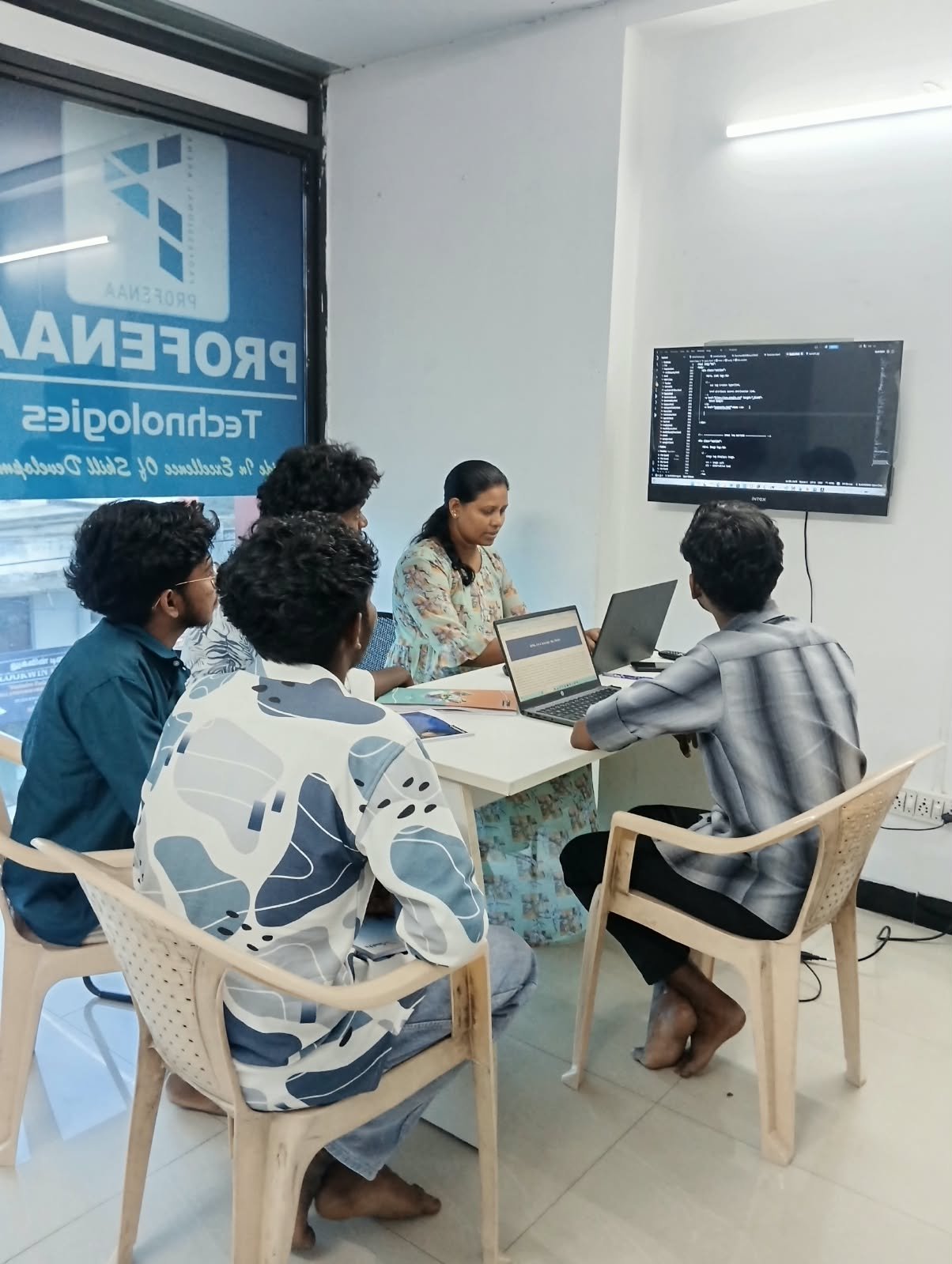
Conveniently located at RSP Towers, Palladam Main Road, Tiruppur, Profenaa Technologies offers expert-led Data Analytics and Full Stack Development training programs equipped with dedicated computer labs and placement support.
Frequently Asked Questions
Do I need prior coding or programming knowledge to learn SQL?
No prior coding experience is required. SQL uses straightforward English-like commands (SELECT, FROM, WHERE), making it one of the easiest languages for beginners to learn.
Should I learn SQL or Python first for data jobs?
For data analyst, MIS, and business reporting roles, learning SQL first is highly recommended as databases form the core of every organization.
How long does it take to master SQL and become job-ready?
With consistent daily practice and hands-on mini projects, beginners can become comfortable and job-ready with SQL in 6 to 10 weeks.
Ready to Master SQL and Launch Your Data Career?
Visit Profenaa Technologies at RSP Towers, Palladam Main Road, Tiruppur. Call 7092225100 / 7538825100 to book your demo class!
Book Free Counselling